Tuesday, April 22, 2014

REPOST: EPRI Reveals Its Worldview on the Integrated Electrical Grid

Nonprofit organization Electric Power Research Institute (EPRI) presents its systematic view of the future of integrated electric grid in the article below.
Image Source: greentechmedia.com
 

The electricity business of 2024 is going to look a lot different than the situation today -- and the utility industry knows it.

The Electric Power Research Institute, a 501(c)(3) nonprofit, is essentially the research arm of the electrical utility industry. The group's recent report, The Integrated Grid, is the first phase of a larger effort to look at distributed energy resources on the grid edge and their impact on business as usual. The report provides a technical rationale for staying plugged into the grid and a cogent argument in favor of capacity fees and charges for grid services. The authors also exhibit a fondness for smart inverters.

We spoke with EPRI's Jeffrey Hamel, the executive director of the Power Delivery and Utilization Team which authored the report (which can be downloaded here).

"The Integrated Grid can mean a lot of things to a lot of different people," said Hamel. But to him, it means "how DG resources, generation and storage all come together."

The report covers distributed energy resources such as "small natural-gas-fueled generators, combined heat and power plants, electricity storage, and solar photovoltaics on rooftops and in larger arrays connected to the distribution system."

In a presentation earlier this month, Hamel acknowledged that "there is a massive change underfoot." He said that all load growth was being met by renewables and natural gas. "We have to consider [what happens] when solar is not on-line" so "we may not have to build vast amounts of fast-ramp generation for a 7 p.m. system peak" He asks, "How do we ensure that the grid is optimized at a system level so we are fully utilizing all of the resources available, from central station generation to distributed generation?"

That's the perspective The Integrated Grid is trying to provide, said Hamel. "We want to provide the distribution system operator with insight." He added that "it's not just distributed generation; storage is coming."

"What's happening at the edge of the grid will affect what's happening at the transmission level," said Hamel.

Hamel suggested that "an integrated grid allows higher penetration of renewables" and will prevent curtailment of wind and solar. Hamel notes that distributed generation "is not just about variable sources," adding, "We can see a future with more gas-based DG. But customers will still remain connected to the grid. The grid provides voltage quality and startup power."

He continued: "Being able to integrate DER [distributed energy resources] into the planning and operation of the system is how we can get value out of the system." He said that distributed generation has to be incorporated into the grid with "visibility and control of these resources" through a management system incorporating sensors, communications and voltage control technology.

"Part of the work we're doing is on interconnection standards," said Hamel. He cited the
IEEE 1547 DER interconnection standards working group and CPUC Rule 21. He said the team is watching German interconnection efforts with an eye toward smart inverters providing grid services such as voltage support, adding that "technology like smart inverters is already cost-effective."

Hamel suggested that "this type of innovation makes DG an enabler instead of a constraint."

What do utilities want?

Hamel didn't discuss rate structures during our conversation, but the report makes the case for the value of grid services and a need to revisit power market rules and rate structures. If EPRI is at all representative of its utility members, then here is what utilities want:

"Capacity-related costs must become a distinct element of the cost of grid-supplied electricity to ensure long-term system reliability." "Power market rules that ensure long-term adequacy of both energy and capacity" "A policy and regulatory framework to ensure that costs incurred to transform to an integrated grid are allocated and recovered responsibly, efficiently, and equitably." "New market frameworks using economics and engineering to equip investors and other stakeholders in assessing potential contributions of distributed resources to system capacity and energy costs."

Image Source: greentechmedia.com
 
The report claims that "the cost of supply and delivery capacity can account for almost 50% of the overall cost of electricity for an average residential customer. Traditionally, residential rate structures are based on metered energy usage. With no separate charge for capacity costs, the energy charge has traditionally been set to recover both costs. This mixing of fixed and variable cost recovery is feasible when electricity is generated from central stations, delivered through a conventional T&D system, and used with an electromechanical meter that measures energy use only by a single entity."

Image Source: greentechmedia.com
 

But that's not the case when distributed generation enters the equation. The rate structures forced by the widespread advent of DER (and seemingly accepted by EPRI) appear to further shift the role of the utility to that of grid services provider rather than kilowatt-hour supplier.


Sureway International runs a well-stocked inventory of lighting, electrical, and industrial solutions backed by a professional sales and service team willing to assist you in all your technology needs. Go here to browse the company's expansive range of high quality electrical solutions at a price you can reach.

Thursday, March 27, 2014

REPOST: Be like MacGyver: 12 pocket multitools for travelers

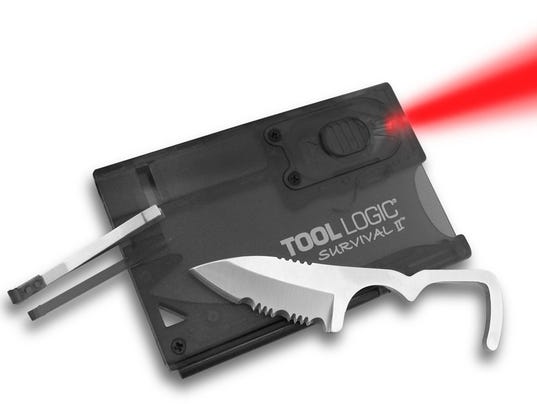
It can be a bother for the handy man to always carry his toolbox with him, so it’s a good thing pocket multitools were invented. This article from USA Today features some of the best pocket multitools from across the globe. 
Image Source: www.usatoday.com
There are times when you need exactly the right tools for the job -- say, an axe for felling a tree or a set of socket wrenches for tuning up your car -- and times when you just need a tool to get the job done.
Welcome to the wonderful world of multitools.

These handy devices pack the better part of your toolbox into pocket-sized packages that you can take anywhere and use any time. Need to saw a couple branches at your campsite, cut some rope and pop open a beer when you're done? How about tightening your snowboard bindings and filing the edges of your board? Some multitools are so well equipped for the task at hand they take the MacGyver out of MacGyvering and are just, well, useful.

Distinct from the Swiss Army knives of yore, modern hinged multitools date back to the 1980s when Leatherman introduced its first Pocket Survival Tool (PST). Instead of the traditional folding knife with tools tucked in the handle, the PST hinged together two handles that, when unfolded, revealed pliers and a dozen other implements, including screwdrivers, can and bottle openers, and a knife.

Since then multitools have evolved into countless shapes and sizes. There are tiny tools for carrying on your keychain, sleek alternatives to the Swiss Army knife and burly beasts that are one step away from military-issue.

Leatherman still dominates the marketplace -- the name "Leatherman" has become a byword for multitool -- and our list reflects that. But other brands, such as Gerber, Columbia River Knife and Tool, SOG Specialty Knives and Victorinox have since carved out niches for themselves. (Try to sell a Gerber fan a Leatherman and you'll see the kind of fervent brand loyalty multitools inspire.)

It can be tough to sort through all the high-quality multitools on the market, so we picked a solid dozen from key-sized on up. Among them, they have just about every individual hand tool you might need on the fly.
There are dozens more out there worthy of the name, so this is just a starting point. Multitools can be very specialized -- there are ones for rifle maintenance, ordinance disposal and electrical work, to name a few examples -- so the key is to think of what tools you actually need and go from there.

Swiss+Tech Utili-Key 6-in-1

It'd be easy to mistake this tiny tool for a key -- and that's the point. Weighing less than an ounce, this key-shaped tool clips onto your keyring, but when opened it reveals a small knife with a half-serrated blade, Phillips screwdriver, medium and eyeglass-sized flat drivers, and a bottle opener. It's not the easiest to use -- watch out for the blade when tightening screws -- but it's a cheap light-use option if your keychain is already over-cluttered.
Sureway International carries an excellent inventory of superior industrial solutions, such as hand tools, safety equipment and apparel, welding products, lighting, and material handling. Visit this website for more information.

Monday, February 24, 2014

Switching to energy-efficient lighting

The start of 2014 marked the end for incandescent bulbs as many countries, including the United States and Canada have started phasing out the traditional lighting fixture. The ban on the old bulbs by governments is based on findings from years ago, when the bulbs were pronounced energy inefficient. The light bulb, which remained unchanged since Thomas Edison patented the technology in 1880, is only 10 percent efficient, the rest of the electricity it uses up is lost as heat.

http://www.julietschor.org/2011/03/the-great-light-bulb-and-toilet-controversy/ 
Image Source: julietschor.org

Some consumers cannot help but express their confusion over the impending demise of the incandescent. After all, this is the lighting that was used by their families for generations. Others, meanwhile, are concerned about the safety risk, high cost, and performance of the replacement technologies.

http://www.smallworks.ca/blog/tag/earth-hour/
 Image Source: smallworks.ca

Thus, it pays for consumers to know about the various energy-efficient options from trusted distributors of lighting products. Surveying the products of reputable Canadian lighting companies may guide consumers from the rest of the world, as Canada has a headstart in moving away from incandescent. Canadian company Sureway International, for instance, has an extensive array of lighting products that meet today’s energy standards. These include light emitting diodes or LEDs, compact fluorescent lamps or CFLs, and halogen lamps.

http://footage.shutterstock.com/clip-790663-stock-footage-light-bulb-spinning-earth-hd.html
 Image Source: footage.shutterstock.com

The big switch to energy-efficient lighting may be an ordeal for some consumers, but in the long run, it could actually translate to savings. People would be using nearly a third less electricity after replacing their incandescent light bulbs with energy-efficient ones. In addition, the implementation of stricter energy standards would mean more quality products to brighten homes for a long time.  

Sureway International is recognized for its decades of experience as an all-inclusive source of industrial goods and equipment. Its official website features different products that could help consumers decide on the best replacement lighting for their home.